
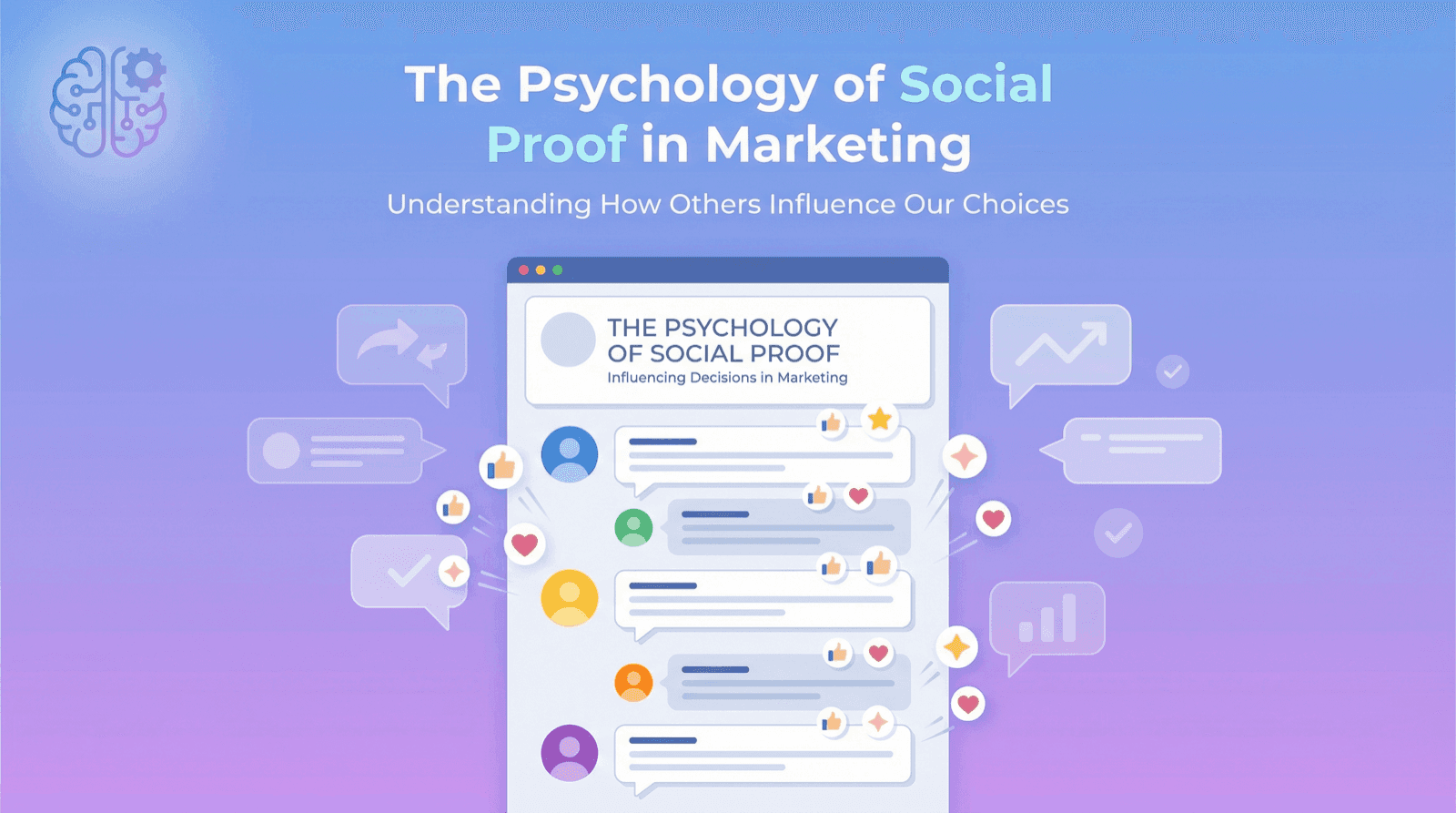

Why We Trust Comments More Than Ads
A banner ad says "Best product ever." You scroll past it. A comment section with 47 people saying "this actually changed my routine" — you stop and read.
That's social proof at work. It's one of the most studied phenomena in behavioral psychology, and it's the reason comment sections drive more conversions than almost any other content format.
Robert Cialdini identified social proof as one of the six principles of persuasion back in 1984. The core idea: when people are uncertain about a decision, they look to others for guidance. Comments are the purest form of this — unfiltered reactions from real people (or what looks like real people) responding to something in real time.
The Numbers Behind Social Proof
The data is consistent across industries:
- 92% of consumers read online reviews before making a purchase (BrightLocal, 2024)
- Ads featuring social proof see 15-30% higher click-through rates compared to standard creative (Meta Business, 2025)
- UGC-style content generates 4x higher engagement than polished brand content on Instagram (Stackla)
- Comment-style testimonials convert 34% better than quote-style testimonials in A/B tests (ConversionXL)
- Product pages with visible user comments see 270% more conversions than those without (Spiegel Research Center)
The pattern is clear: people trust other people more than they trust brands. Comments feel more authentic than testimonials, more spontaneous than reviews, and more relatable than influencer endorsements.
The Psychology: Three Effects That Drive Comment Trust
1. The Bandwagon Effect
When you see a comment section full of positive reactions, your brain's shortcut kicks in: "If all these people think it's good, it probably is." This is the bandwagon effect — the tendency to align your behavior with what appears to be the majority opinion.
In marketing, this is why volume matters. A single testimonial quote is nice. A comment section with 15-20 positive reactions creates the feeling of consensus. The viewer's brain doesn't carefully evaluate each comment — it registers the pattern and draws a conclusion.
2. Social Validation
Comments feel earned, not manufactured. A polished testimonial card on a website looks like marketing (because it is). But a screenshot of an Instagram comment section showing genuine-looking reactions? That feels like proof.
The key difference: testimonials are curated by the brand. Comments appear to be curated by the audience. Even when viewers know intellectually that a comment screenshot might be staged, the format itself carries more weight because it references a context (a social media platform) where people freely express opinions.
3. Parasocial Familiarity
Instagram, YouTube, and TikTok comment sections are part of daily life for most internet users. The format is instantly recognizable. When you see a YouTube comment section in an ad, your brain doesn't process it as "marketing material" — it processes it as "YouTube," a context where you're used to seeing authentic reactions.
This familiarity creates a halo effect. The trust you've built with the platform transfers to the content, even when it's sitting inside an advertisement.
How Brands Use Comment Mockups in Ad Creatives
Smart marketers have figured this out. Here's how comment screenshots show up in real campaigns:
The "Look What People Are Saying" Ad
The simplest format: a product image or video overlaid with a comment section showing enthusiastic reactions. Used heavily in Facebook and Instagram ads for DTC brands. The comments reference specific product benefits in a casual, conversational tone.
Why it works: The viewer sees social proof before they even register that it's an ad. The comment format bypasses the "this is marketing" filter.
The Reaction Video Thumbnail
YouTube thumbnails featuring comment section screenshots are one of the highest-performing formats for driving clicks. The comments tease something surprising or emotional, creating curiosity gaps that drive viewers to click.
You can create these with a YouTube comment generator — build the exact comment section you need, export it, and layer it on your thumbnail.
The UGC-Style Story Ad
Instagram and TikTok story ads that mimic organic content — showing a phone screen with an Instagram comment section full of positive reactions. The ad looks like someone screenshotted their own post, making it feel organic rather than produced.
The Case Study Screenshot
For B2B and SaaS marketing, comment screenshots from LinkedIn, X, or YouTube serve as social proof in case studies and sales decks. "Here's what the community said" carries more weight than a formal testimonial.
The Comparison Post
Side-by-side: your product's comment section vs. a competitor's. The visual contrast between positive and negative reactions makes the argument without saying a word.
The Ethical Framework for Comment Mockups
Let's be direct about this. Comment mockups are a creative tool, not a deception tool. Here's the line:
Ethical Uses
- Pitch decks and proposals: Showing a client what their comment section could look like with the right strategy
- Ad creatives: Using comment-style layouts to present real customer sentiment in a familiar format
- Educational content: Teaching social media marketing with controlled, purpose-built examples
- Prototypes and design: Including realistic comment sections in app mockups and UI designs
- Content creation: Building visual assets for videos, thumbnails, and social posts
Not Ethical
- Screenshotting fake comments and claiming they're from real users on a real post
- Fabricating engagement metrics to mislead investors or partners
- Impersonating real accounts to damage reputations
- Posting fake comments on actual social media platforms
The distinction is context. A comment mockup in an ad creative is a design choice — the same way stock photos represent scenarios without being documentary evidence. A fake screenshot presented as proof of real engagement is fraud.
Disclosure Best Practice
For paid advertising, consider adding a small "Simulated" or "Mockup" label where regulations require it. The FTC's endorsement guidelines apply to social proof in advertising — when in doubt, disclose.
Creating Social Proof Screenshots That Convert
Not all comment mockups are created equal. Here's what separates the ones that convert from the ones that get ignored:
1. Match the Platform Your Audience Uses
If your audience lives on Instagram, use Instagram comment mockups. If they're YouTube-native, use YouTube comment screenshots. The format should feel like home to the viewer.
Mockly supports comment sections for YouTube, Instagram, TikTok, X, Facebook, LinkedIn, Reddit, and more — so you can match the platform to your audience.
2. Vary the Engagement Numbers
Real comment sections don't have uniform engagement. Top comments might have 2,000 likes. Most have single digits. This variation signals authenticity. A mockup where every comment has exactly 50 likes screams "fake."
3. Write Comments Like Real People
Skip the corporate language. Real Instagram comments are short, emoji-heavy, and conversational. "this is literally everything" hits different than "I am thoroughly impressed with this product's quality." Study real comment sections in your niche and match the tone.
4. Include Some Neutral or Questioning Comments
A comment section where every single response is glowing praise looks suspicious. Mixing in questions ("does this work for sensitive skin?") or neutral observations ("I've been seeing this everywhere") makes the section feel natural.
5. Use Realistic Profiles
Generic usernames and default avatars kill credibility. Use varied profile pictures, handles that look like real accounts (@travel.with.emma, @chef_marcus), and occasionally add a verified badge for brand accounts.
6. Keep It Current
Instagram's design changes. YouTube's layout evolves. A comment mockup using a three-year-old interface design is instantly recognizable as fake. Mockly keeps its templates updated to match each platform's current design — that's the whole point.
The ROI of Social Proof Content
When you include social proof in your marketing materials, you're not adding decoration — you're adding a conversion lever.
Here's a framework for measuring impact:
- A/B test ad creatives with and without comment-style social proof. Track CTR and conversion rate.
- Monitor landing page engagement when you add comment screenshots above the fold vs. traditional testimonials.
- Compare email click-through rates on newsletters featuring comment screenshots vs. plain text quotes.
Brands consistently report that social proof content — especially in the familiar format of platform-native comments — outperforms traditional testimonial formats. The format does half the persuasion work before the viewer even reads the content.
Tools for Creating Social Proof Comment Screenshots
You have three approaches:
Screenshot real comments: Quick, but raises privacy concerns, exposes real usernames, and you can't control the narrative. If someone deletes their comment, your asset is outdated.
Design from scratch in Figma/Photoshop: Maximum control, but matching platform-specific fonts, spacing, and icons pixel-for-pixel takes hours. And when the platform updates its design, you start over.
Use a dedicated generator: Purpose-built tools like Mockly let you create comment sections that match each platform's current look in minutes. You control every element — usernames, comments, likes, replies, timestamps — and export in one click.
Mockly supports YouTube comments, Instagram comments, and 40+ apps across chats, AI chats, posts, comments, stories, and emails. The screenshots look like the real platform interfaces.
Putting It All Together
Social proof works because humans are social creatures wired to follow the crowd. Comment sections are the most powerful format for social proof because they feel organic, they reference familiar platforms, and they carry the weight of group consensus.
Comment mockups let you use this psychology ethically — creating visual assets that borrow the trust and familiarity of platform-native comment sections without screenshotting real users or fabricating actual engagement.
The brands that understand this are already using comment screenshots in their ads, landing pages, pitch decks, and content. The ones that don't are still putting "Trusted by thousands" in plain text on a white background.
Related Guides
- Instagram Comment Generator: Create Realistic Comment Mockups
- YouTube Comment Generator: Create Fake Comment Sections
- Message Mockups for Marketing Presentations
- How Marketers Use Mockly
- Complete Guide to Fake Screenshots
Ready to create your first social proof screenshot? Try the Instagram comment generator or the YouTube comment generator for free, it takes two minutes.
Try it yourself
Create your first mockup in under a minute
40+ apps. Free to try, no signup needed.
Start your mockupAbout the author
Elena Brooks
Content Editor
Elena writes step-by-step tutorials and practical guides for creating realistic chat and social mockups. She focuses on helping creators quickly turn ideas into polished visuals that look believable in demos, landing pages, and client work.
Tags
More from the blog

How Agencies Use Chat Mockups in Pitch Decks
How agencies use WhatsApp, Slack, Instagram DM, and comment mockups to make strategy decks, campaign concepts, and proof slides easier to buy into.

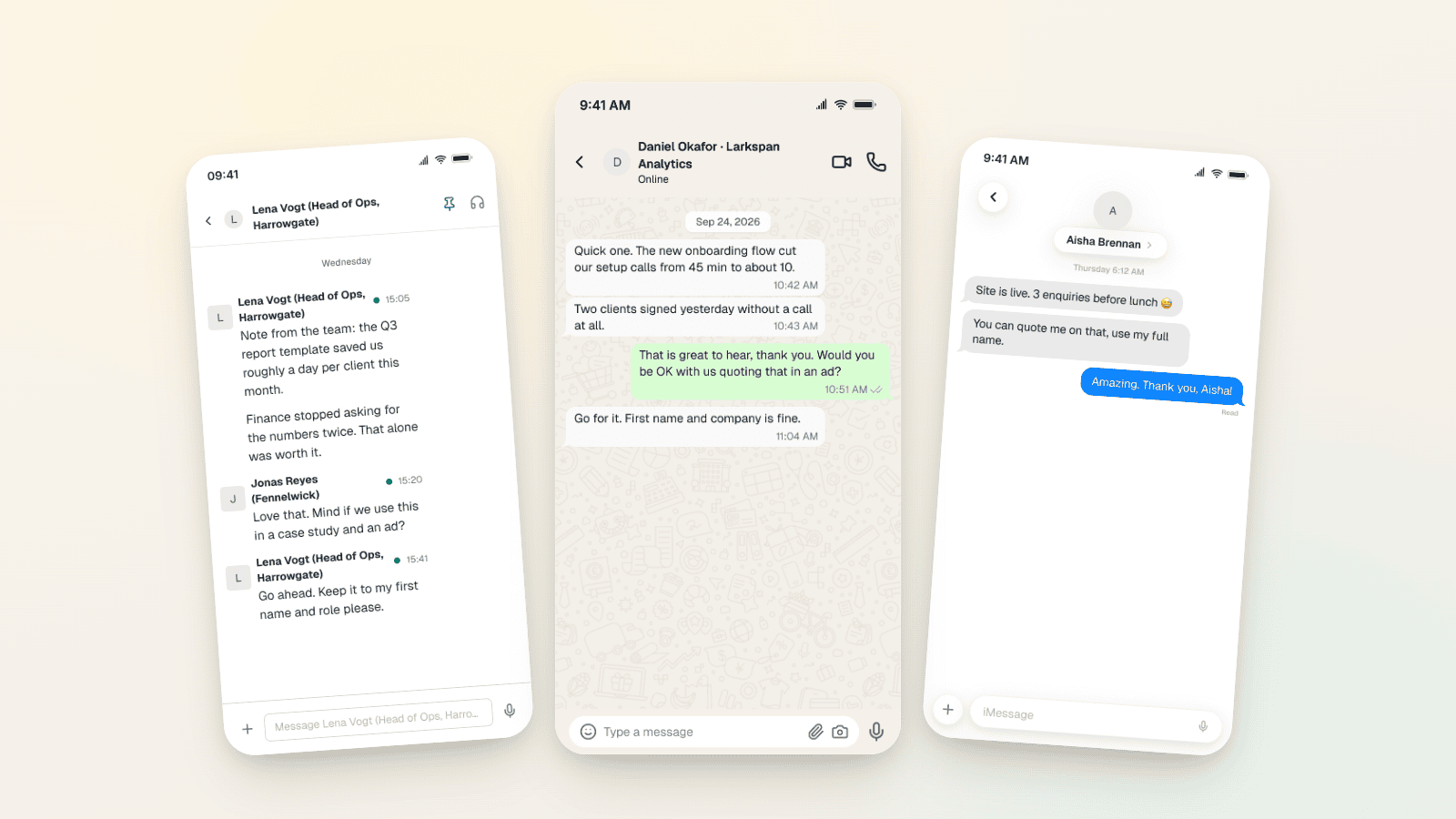
Testimonial Ad Examples 2026: Chat Screenshot Formats
Five testimonial ad formats for Meta in 2026, with WhatsApp, Slack and iMessage screenshot examples, 1:1, 4:5 and 9:16 sizes, and the FTC and EU rules.
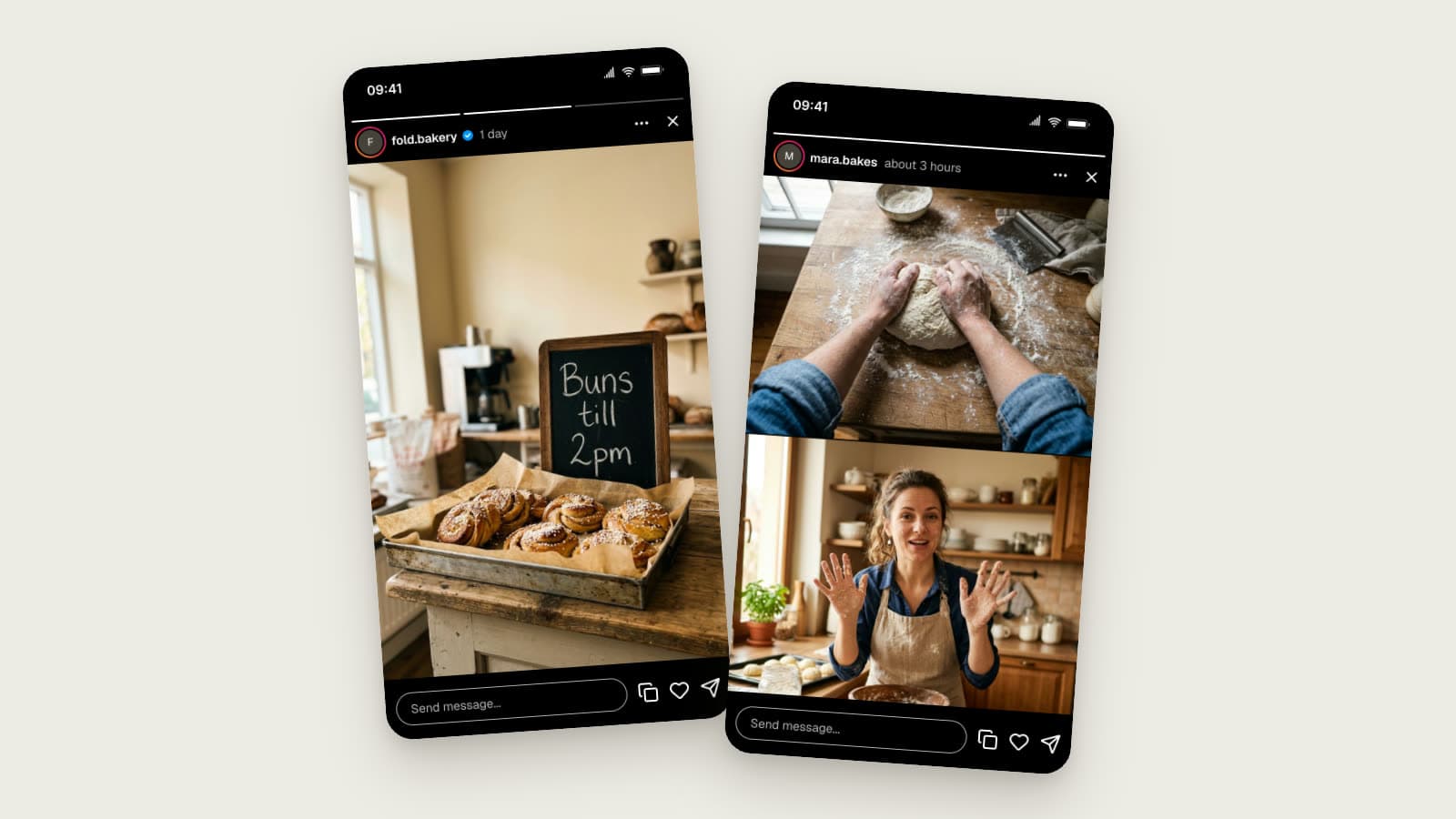
Instagram Story Mockups in 2026: Story Extend and Multi-Cam
Realistic Instagram story mockups for 2026: progress bar, story ring, a day-old Story Extend example, and a two-angle Multi-Cam frame. Free to try.